
Why I Stopped Wearing Traditional Bras – and What I Discovered When I Chose Something Softer.

After becoming a mother, I found myself more at ease in my body than ever before.
It was during this time that I began reaching less for structured bras—and more often for nothing at all. I have smaller breasts and never truly needed the level of support traditional bras offer, yet I wore them for years out of habit… and out of quiet adherence to what breasts are “supposed” to look like under clothing.
Eventually, that expectation began to fade.
I stopped caring what was considered normal, or polished, or expected—and in its place, I found a kind of freedom I hadn’t realized I was missing.
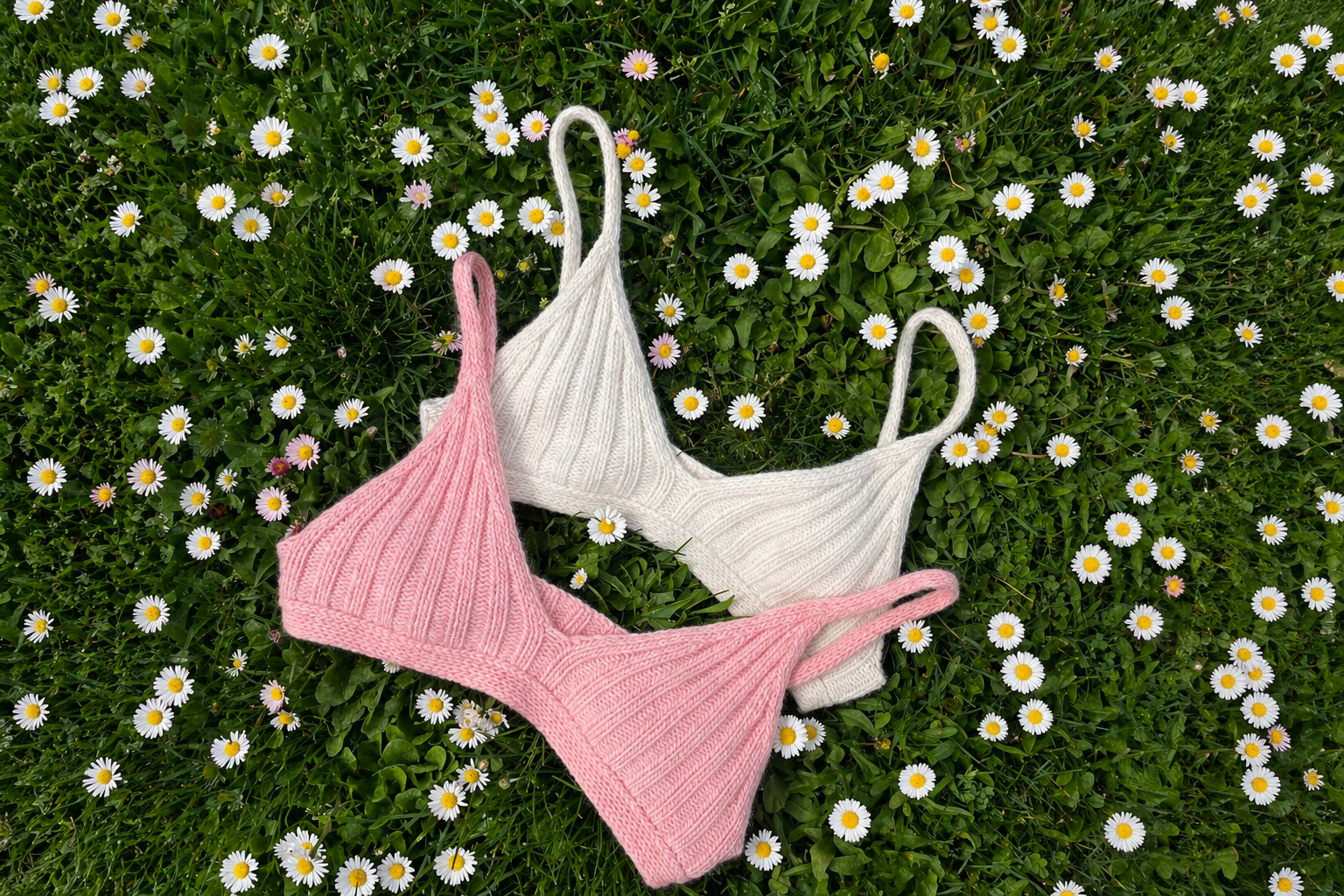
As a knitter, I became curious. I started making my own bralettes, just to see what it might feel like to create something different.
What I found was a new kind of comfort.
They offered gentle coverage without restriction. They moved with me, rather than holding me in place. And unexpectedly, that soft layer of natural fiber across my chest helped regulate my body temperature—keeping my core warmer in the winter, without feeling heavy or confined.
It was a small shift, but it changed the way I experienced my body each day.
This is what I discovered along the way.
A Return to Freedom
The first thing I noticed was how different my body felt without constant pressure.
No tight band or metal wires pressing against my solar plexus that inhibited my breath or my movement. It felt wonderful to move freely, to inhale as deeply as I wanted, and to feel uncontained. This is the way the body is meant to feel. Fluid. Free. Ever-moving.
Gentle Support, Not Constant Pressure
Traditional bras are designed to lift, shape, and secure—but often at the cost of compression.
And while that level of structure may be necessary at times, I began to question whether it needed to be constant, especially living in a body with smaller breasts. I didn't care to make them look “fuller” or “bigger than” real life. I just wanted to be present in my body. Let them hang as nature intended.
As I began exploring the benefits of not wearing a bra, I also came across conversations around how tight bands and undergarments may interfere with natural lymphatic flow, particularly around the chest and underarm area. This perspective resonated with me, and I found myself drawn toward the idea of less pressure, rather than more, for the sake of my health.
What We Place Against the Skin Matters
Our skin is not separate from the rest of us. It is the largest organ in our body and outside of the gastrointestinal tract, also one that is constantly protecting us from the outside “gunk”. It absorbs, breathes, and interacts with everything we place on it, including fabrics.
Many traditional bras are made with synthetic materials—polyester, nylon, acrylic, spandex, and chemically treated fabrics that prioritize durability and cost over the experience of wearing them. My German grandmother, who was an amazing seamstress and knitter, taught my mother and I always to buy natural fibers, cotton and wool. Ever since I was a child, I heard that wearing synthetic clothing wasn't good for our health and “makes you stink”. So naturally, I have always been one to choose more cotton, linen, and wool clothing than most.
As an adult, and mother, this topic became even harder to ignore. Unless it is an outer piece of clothing like ski pants or a ski coat, I try to avoid synthetics at all costs for myself and my children. I want something natural. Untreated. Alive in a way that feels in harmony with my body and with the earth.
Wearing More, Washing Less
Something unexpected happened when I shifted to natural fibers—especially merino wool.
I need to wash my garments far less often because they don't hold odor in the same way. Merino naturally resists odor and regulates moisture, which means it can be worn repeatedly without the same buildup that occurs with synthetic fabrics. The same goes for cotton, linen, and silk. Bras are worn so closely to the body that they tend to trap moisture easily, therefore merino becomes an excellent choice for such intimate garments.
Fortunately, less washing not only simplifies daily life—it also extends the lifespan of each piece, and reduces water and energy use over time. Furthermore, I found myself enjoying taking care of each piece I own. Washing by hand or hang drying items, allowed me to slow down and be more present.
It all fostered a quieter rhythm. One that asks less of both me and the earth. Wouldn’t we all feel better slowing down a bit more?
In Relationship With the Earth
Over time, the shift became about more than comfort or even my own health.
It began to feel like a quiet, radical act of care for the Earth.
A small but meaningful way to reduce my impact—to step away from the cycle of excess and move toward something more intentional.
I found myself choosing fewer garments, made from natural fibers. Sourcing more of my clothing secondhand. And when I did buy something new, it was chosen with care—made slowly, and meant to last.
This way of dressing stands in contrast to the rhythm of fast fashion.
Yes, you may pay more for a thoughtfully made piece.
But your body—and the earth—are asked to carry far less.
A Material That Adapts With You
One of the reasons I continue to return to merino is how intuitively it responds. It warms when I am cold, and cools when I am warm. It breathes with me, rather than trapping heat or moisture.” And it never stinks. So when people ask, ‘”you wear a wool bra in summer?”, I smile and say “Yes!”. Synthetic bras cannot compete. There is no need to constantly change, adjust, or layer in excess. Merino meets you where you are, which is such a beautiful and sustainable concept.
Where I Landed
These days, I find myself choosing between two things.
Nothing at all—true freedom, especially at home or among close friends and family.
Or a handknit Hautnah bralette—something that feels almost like wearing nothing at all. I reach for it when I want a gentle layer of support, a bit of warmth, or when I’m out in the world.
That’s it.
If you’ve ever felt the urge to take your bra off the moment you walk through the door…
you may already understand. I never thought a bra could change the way I view and interact with myself and the world, but it did, and profoundly.
This is simply an invitation to listen to that feeling—and to follow it, just a little further, who knows what it will inspire.
— Selva
